Amanda and Nina’s mother-daughter relationship
Fever DreamAmanda and Nina’s mother-daughter relationship is both a source of daily closeness and the measure by which the novel registers danger. Amanda repeatedly imagines the distance separating her from Nina as a practical problem she must calculate and a bond that tightens under threat. As the story moves from ordinary care toward poisoning and a desperate proposed migration of souls, that bond becomes more than reassurance: it exposes the limits of a mother’s vigilance and the terrible difference between trying to protect a child and being able to control what happens to her.
Vigilance and the Rescue Distance
Amanda names her habit of measuring the distance between herself and Nina the “rescue distance.” At the pool, she imagines how long it would take to jump from the car and reach Nina if the child suddenly ran toward the water. She says she spends much of the day calculating the distance, while recognizing that she herself often takes risks. Protection is thus presented not as a settled maternal instinct but as a repeated mental exercise, continually adjusted to whatever danger Amanda can imagine.
At the vacation house, that calculation expands from the space between mother and daughter to the hazards of their surroundings. During the first hours there, Amanda wants Nina close, checks how many exits the house has, looks for splintered patches of floor, and considers whether the creaking stairs might be dangerous. She shows Nina what she has noticed. Nina is obedient, though not fearful; by the second day, Amanda feels the invisible tie between them unspool into a more permissive connection that allows them some independence. Their closeness is therefore not simply physical confinement. It can loosen when circumstances feel manageable, then draw tight again when Amanda’s sense of danger changes.
That tightening is palpable after Amanda speaks with Carla. Nina’s familiar bursts of energy, including running past the kitchen window, now make Amanda anxious. She likes Nina’s energy, but the conversation has made the imagined distance shorter again. The account links a shift in Amanda’s sense of threat to a shift in how much freedom she can bear to give her daughter: Nina’s ordinary movement remains the same, but Amanda experiences it differently.
Care in Ordinary Routines
The relationship also appears in quiet, practical acts that make up their shared day. When Amanda decides they must leave sooner than planned, she packs Nina’s bag and wakes her with tea and cookies. Nina eats breakfast in bed while Amanda folds her clothes, puts away her markers, and stacks her books. Still sleepy, Nina does not insist on knowing why they are returning early or where they are going. Amanda’s care is expressed in preparation and attention to Nina’s belongings, while Nina’s trust appears in her acceptance of the journey without demanding an explanation at that moment.
Food and movement provide another measure of their domestic rhythm. At the vacation house, Amanda makes Nina a small tuna salad. Nina asks if the woman has gone; once reassured, she runs around the house, laughing, and returns to eat before going out again. Amanda knows the pattern: Nina has begun running two or three times around the house at lunchtime. The episode shows a child making a routine of the available space and a mother keeping watch from within the household, able to enjoy Nina’s energy even as her own sense of risk makes that energy newly troubling.
Amanda’s vigilance has an explicitly emotional and bodily dimension, but the narration does not reduce it to a single feeling. After the conversation with Carla, Amanda wonders how different David is now from the person he was six years earlier and what he might have done for his mother to stop accepting him as her child. She recognizes that these questions trouble her, then sets them aside as unimportant compared with what must be understood. Against that uncertainty, the bond with Nina gives Amanda an immediate responsibility she can name and act upon.
Illness, Danger, and the Limits of Protection
Poisoning changes the stakes of maternal care. In Carla’s account of David’s illness, the proposed way to save him is to move his spirit into another body, splitting the poison between two bodies and possibly giving him a chance to survive. Amanda is told that the migration could also introduce an unknown spirit into the sick body and leave each person changed by what had moved between them. This earlier account establishes that, in the novel’s world, a mother’s effort to save a child may be framed as a decision with consequences for the child’s identity, not merely a choice between health and illness.
The possibility of danger is already part of Amanda’s way of seeing Nina. She considers whether what happened to Carla could happen to her and imagines the steps needed to reach Nina if she ran to the pool. Later, when she understands that the poison and contamination are central to what has happened, those calculations no longer promise control. They have helped her notice and anticipate danger, but they cannot make her certain of its origin or prevent it from reaching her family.
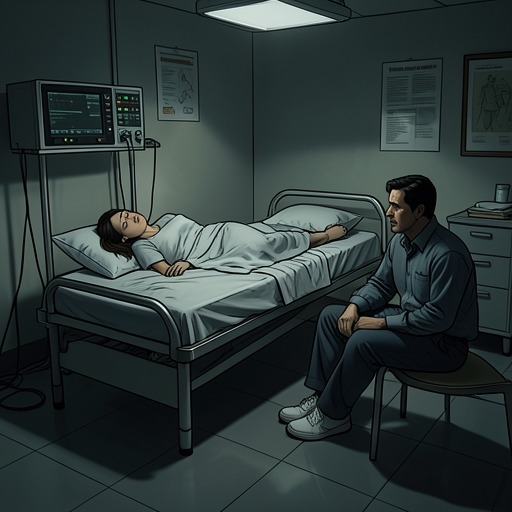
At the point of crisis, Amanda’s mother-daughter bond is expressed as an obligation she cannot set aside. She is told that Nina was found sitting on a curb a few blocks beyond where the car had been parked, and that Nina would not have survived many more hours. Amanda fears that events are unfolding at the Green House and understands that the request being made is for forgiveness, not meaningful consent. Though she wants to get out of bed and reach Nina, she cannot move at once; her illness comes and goes, and pain repeatedly interrupts her effort to act. The scene draws a hard distinction between the strength of her resolve and the physical ability to carry it out.
Consent, Separation, and the Unbroken Bond
The demand for consent makes maternal responsibility more complicated than a simple wish to rescue. Carla holds Amanda’s hands and asks her to agree, but Amanda initially understands the proposed action as something intended for herself and says she will remain in her own body. Carla corrects her: she means Nina. The clarification reveals a separation in knowledge at the very moment when Amanda most urgently needs to know where her daughter is and what is being done. Her bond with Nina does not give her full access to the decisions affecting Nina; it instead intensifies her need to ask, understand, and intervene.
Amanda is told that Carla will recognize her real David when she finds him. This statement belongs to Carla’s account of the search and its consequences, but it also sharpens the uncertainty surrounding the family’s situation: the terms of rescue depend on identifying a child whose spirit may have moved between bodies. For Amanda, the immediate question remains Nina’s whereabouts and safety. She tries to tell her husband where Nina is and thinks of getting out of bed, yet the intermittent effects of her illness prevent immediate action. The rescue distance has become a bond she feels with great force, but it cannot overcome every obstacle between intention and response.
When Amanda describes the rope between mother and daughter as close to breaking, she rejects that possibility by returning to the relationship itself: she is Nina’s mother, and Nina is her daughter. The insistence does not resolve the danger or undo the separation; its force comes from being a claim of connection at a moment when Amanda cannot make circumstances obey it. Across the novel, the rescue distance and the rope give that connection two complementary forms: one measures the physical reach required to protect Nina, while the other names a tie that Amanda experiences as enduring even when she is unable to act.
Narrative Significance
The relationship is conveyed through an exchange in which Amanda recounts events and David presses her to identify what matters. She can become stuck despite seeing the story clearly, and she recognizes that her time is limited, while the conversation repeatedly redirects attention toward the circumstances of Nina’s danger. In this frame, the mother-daughter bond is not only an emotional subject; it is also a way of organizing knowledge. Questions about where Nina is, how quickly Amanda could reach her, and what has happened to her determine which details acquire urgency.
A recurring distinction between what seems important and what is important complicates Amanda’s protective attention. She spends time wondering how David changed and why his mother no longer accepts him as hers, but then insists those are not the central questions. The story places such speculation beside the more immediate demands of Nina’s safety. This contrast neither dismisses Amanda’s concern about altered identity nor treats maternal vigilance as omniscience; it shows how crisis forces her to choose what she can attend to, even while the wider threat remains difficult to understand.
The bond’s decisive significance lies in its persistence without a guaranteed power to save. Amanda’s routines, calculations, and preparations make care visible in concrete terms, but illness and the uncertain consequences of soul migration place outcomes beyond her control. Her insistence that the rope cannot break affirms the relationship without claiming that love can prevent every harm. Motherhood remains both a lived practice of attention and an unresolved responsibility when attention alone cannot secure a child’s safety.